May 8, 2025

Going Public via Reverse Merger on the OTC Markets: A Legal and Strategic Overview

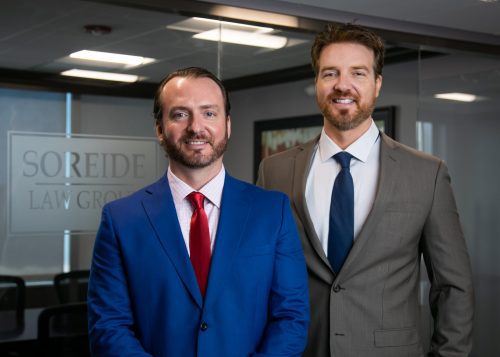
Lars and leif soreide standing in front of company logo smiling

Introduction

For private companies seeking access to capital markets without the time, cost, and regulatory burden of a traditional IPO, a reverse merger onto the OTC Markets presents an alternative path to going public. While not without legal complexity or reputational risks, a reverse merger—when properly structured and executed—can accelerate a company’s public listing and provide liquidity for shareholders. This article explores the legal mechanics, advantages, and potential pitfalls of reverse mergers on the OTC Markets.


1. What is a Reverse Merger?

A reverse merger occurs when a private company acquires a controlling interest in a publicly traded shell company—usually one with little to no operations. In effect, the private company “reverse merges” into the public entity, and its shareholders acquire a majority of the resulting public company’s stock. The private company’s management typically assumes control, and the public company adopts the private company’s name and business model.


2. Why the OTC Markets?

The OTC Markets—particularly the OTCQB and OTCQX tiers—offer lighter regulatory burdens compared to major exchanges like NASDAQ or NYSE. Companies going public through a reverse merger often aim to list on:

  • OTCQB: The “Venture Market,” ideal for growth-stage companies with audited financials.
  • OTCQX: The “Best Market,” which requires stronger governance and disclosure but no SEC registration.

Importantly, companies that go public via reverse merger typically must qualify for one of these tiers to gain meaningful investor interest and avoid the Pink Sheets, which are perceived as higher risk.


3. Legal and Regulatory Framework

Although reverse mergers can bypass the SEC’s IPO registration process, they are still subject to significant legal requirements, including:

  • Due Diligence: Legal counsel must vet the shell company for undisclosed liabilities, outstanding litigation, or regulatory issues.
  • Merger Documentation: Typically involves a share exchange agreement, board resolutions, amended articles, and new management appointments.
  • Super 8-K Filing: If the shell is an SEC-reporting company, the combined entity must file a “Super 8-K” within four business days of the transaction, containing full Form 10-level disclosures for the private company.
  • Securities Law Compliance: Any shares issued as part of the merger must comply with Section 4(a)(2) or Regulation D exemptions.

4. Advantages of a Reverse Merger on the OTC Markets

  • Speed to Market: A reverse merger can be completed in weeks, compared to months for an IPO, if the company is even eligible for a direct IPO.
  • Lower Costs: No underwriters, roadshows, or extensive SEC reviews, resulting in significant savings.
  • Liquidity and Valuation: Public listing may offer liquidity to shareholders and help establish a market valuation.
  • Fundraising Synergy: Companies often combine the merger with a PIPE transaction or Regulation A+ offering to raise capital.

5. Risks and Challenges

  • Shell Company Risks: Many shells have poor histories, hidden liabilities, or disgruntled shareholders. Robust due diligence is essential.
  • Reputation Risk: Reverse mergers (especially onto the Pink Sheets) are often viewed skeptically by institutional investors and the media.
  • Lack of Liquidity: OTC Markets have lower trading volumes and visibility, limiting access to capital unless supported by active investor relations.
  • SEC Rule 15c2-11: Enhanced disclosure rules now require current financial information for quoting securities, raising the compliance bar.

6. Best Practices and Legal Recommendations

  • Use a Clean Shell: Consider using a Form 10 shell or a custom-created shell with no legacy issues.
  • Coordinate with PCAOB Auditors: Audited financials are critical for listing on OTCQB/OTCQX and for future uplisting.
  • Prepare a Strong Disclosure Package: Even if not initially SEC-reporting, robust disclosures help build credibility and investor trust.
  • Plan for Post-Merger Capital Raising: Combine the merger with a PIPE, convertible note, or equity line to maximize capital access.
  • Engage Experienced Legal and IR Teams: Professional execution, disclosure, and investor outreach are essential for success.

Final Thoughts

Going public via reverse merger on the OTC Markets offers a fast-track alternative to the traditional IPO, with strategic benefits for emerging growth companies. However, this path requires meticulous legal diligence, transparent disclosure, and long-term planning to ensure legitimacy and investor confidence. When executed properly, a reverse merger can serve as a launchpad for future capital raises, acquisitions, and uplisting to a national exchange.

S H A R E   T H I S   P O S T

Recent Posts

April 16, 2026
Cove Capital 1031 DST Losses?

Soreide Law Group is investigating potential investor claims involving Cove Capital 1031 Delaware Statutory Trust (DST) investments and whether brokers improperly recommended these specific tax-deferred real estate offerings. Cove Capital 1031 DSTs are structured investments that allow investors to reinvest proceeds from the sale of real estate into fractional interests in institutional-grade properties while deferring […]

April 16, 2026
Marc Koch The Focus Of J.P. Morgan Securities LLC Investor Arbitration Claim About Unsuitable Advice

Investors might have sustained losses due to securities broker Marc Charles Koch [CRD: 4978078, New York, New York], given the publicly available information found on Financial Industry Regulatory Authority (FINRA) BrokerCheck. Koch worked for Morgan Stanley from March 30, 2023, to the present, First Republic Investment Management Inc. from November 7, 2022, to April 25, […]

April 16, 2026
Stephen Hlibok Tied To Merrill Lynch Investor Arbitration Claim About Unauthorized Trading

Investors potentially incurred losses because of securities broker Stephen Charles Newell Hlibok (also known as Stephen Hlibok and Steve Hlibok) [CRD: 1728900, Columbia, Maryland], according to disclosures on Financial Industry Regulatory Authority (FINRA) BrokerCheck. Hlibok worked for Merrill Lynch Pierce Fenner Smith Incorporated from September 25, 1987, to the present as a broker, and from […]

Contact us Nationwide USA
2401 E. Atlantic Blvd., Suite 305, Pompano Beach, FL 33062
Helping clients recover money across the USA
search
Copyright © 2025 Soreide Law Group, PLLC  |  All Rights Reserved